

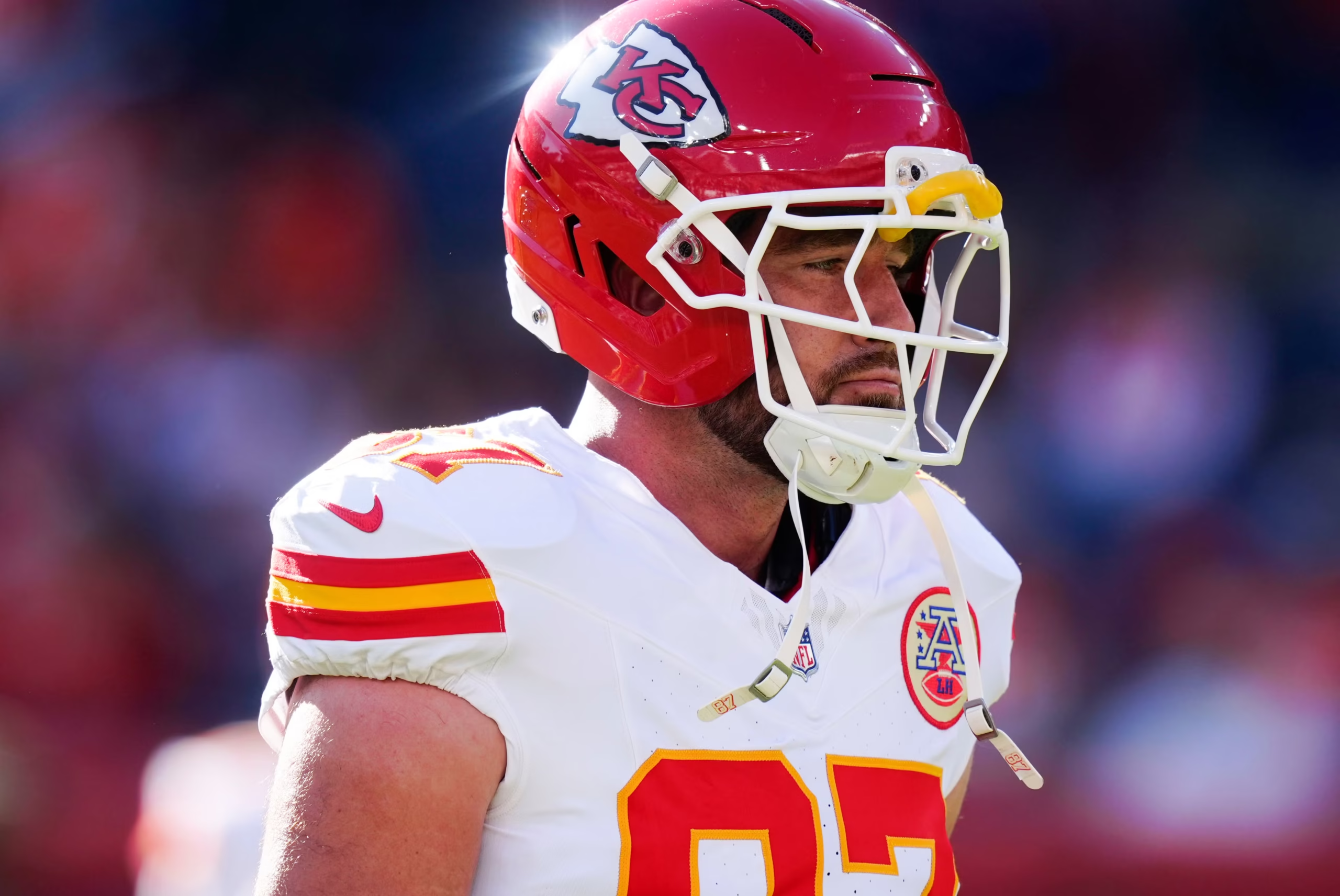
Kansas City Chiefs Dale Carter retirement became a major talking point because it was not really a normal retirement story. It was about a familiar voice leaving Arrowhead Stadium after more than 16 years behind the microphone. For many Chiefs fans, Dale Carter was part of the sound, rhythm, and emotion of game day.
Carter was best known as the public address voice fans heard inside GEHA Field at Arrowhead Stadium. His delivery, especially on third down, helped fire up the crowd during key defensive moments. Therefore, when he suddenly stepped away before the Chiefs’ 2025 home opener, fans wanted to know what happened.
The important point is this: Carter did not retire as a former player. He resigned from his role as the Chiefs’ stadium PA announcer. The word “retirement” is often used in search results, but the more accurate word is “resignation.” In this article, you will learn who Dale Carter is, why he stepped away, why his third-down call mattered, and what his exit means for Chiefs fans.
What Happened in the Kansas City Chiefs Dale Carter Retirement Story?
The Kansas City Chiefs Dale Carter retirement story refers to Dale Carter stepping down as the longtime public address announcer for the Chiefs. He had served in that role for more than 16 years and became one of the familiar sounds of Arrowhead Stadium.
Carter announced his resignation in September 2025, shortly before the Chiefs’ home opener against the Philadelphia Eagles. His decision surprised many fans because it happened quickly and came right before a major home game. As a result, the story spread across local sports media and fan discussions.
The main reason behind his decision was a disagreement over changes to his game-day role. In particular, Carter said the issue involved his signature third-down call. For years, that call had been one of the moments fans connected with him most. When he was told that another PA voice could take over the third-down call to “shake things up,” Carter felt that crossed a personal line.
So, while many people call it the Kansas City Chiefs Dale Carter retirement, the better way to describe it is this: Dale Carter resigned from the Chiefs PA announcer role after creative differences over his third-down call and game-day duties.
Direct Answer: Why Did Dale Carter Step Away from the Chiefs?
Dale Carter stepped away from the Kansas City Chiefs PA announcer role because of creative differences over his in-stadium announcing duties, especially his well-known third-down call. He said the proposed change crossed his personal “red line,” so he decided to resign after more than 16 years as the stadium voice.
Carter also suggested that the role had become less enjoyable over time and required a large time commitment. He planned to focus more on family, radio work, his podcast, high school football broadcasts, and other personal projects. Therefore, the third-down issue was the final push, but it was not the only life factor around his decision.
Who Is Dale Carter?
Dale Carter is a Kansas City media personality and longtime stadium public address announcer. Chiefs fans knew him because his voice carried across Arrowhead during home games. He was not on the field making tackles or scoring touchdowns, but he still played a part in the stadium experience.
A good public address announcer does more than read names. He helps guide the energy of the building. He announces downs, penalties, players, sponsors, and key game moments. However, the best PA voices also become part of the atmosphere. Carter became that kind of voice for many Chiefs fans.
Over time, his style became familiar. Fans knew the rhythm of his calls. They knew when he was about to build excitement. Most importantly, they knew his third-down delivery. In a stadium famous for noise, that voice became one more spark for the crowd.
Why the Third-Down Call Became So Important
The third-down call mattered because third down is one of the biggest moments in football. If the defense gets a stop, the other team may have to punt. If the offense converts, the drive continues. Therefore, fans naturally get louder on third down, especially when the home defense needs help.
At Arrowhead, crowd noise is already a major part of the Chiefs’ identity. The stadium has long been known as one of the loudest places in the NFL. Because of that, Carter’s third-down call worked like a signal. It told fans, “This is the moment. Get loud now.”
For many fans, that call became more than a simple announcement. It became a game-day tradition. It was tied to memories of playoff games, big defensive stops, AFC Championship matchups, and late-game pressure moments. As a result, changing that call felt bigger than changing a normal stadium script.
Why Did Fans React So Strongly?
Fans reacted strongly because sports traditions are emotional. A team’s identity is not built only by players, coaches, and trophies. It is also built by sounds, chants, songs, rituals, and familiar voices.
For example, a fan may remember going to Arrowhead with family and hearing Carter’s voice during a tense third down. Another fan may connect that call with the Chiefs’ recent winning era. Because of that, Carter’s resignation felt personal to many people who attend games or follow the team closely.
Also, fans often care deeply about things that feel authentic. Carter’s third-down call did not feel like a random marketing idea. It felt like something that had grown naturally over time. Therefore, when reports said the team wanted to change how that moment sounded, many fans saw it as an example of modern sports production getting in the way of tradition.
Was This About Former Chiefs Player Dale Carter?
No, this Kansas City Chiefs Dale Carter retirement story is not about the former NFL player Dale Carter. This is an important distinction because the name can confuse readers.
The former Chiefs player Dale Carter was a cornerback who played in the NFL. He was drafted by Kansas City in the first round in 1992 and played several seasons for the Chiefs before later playing for other teams. That Dale Carter is a former player.
However, the Dale Carter in this story is the longtime Chiefs public address announcer. He is the stadium voice fans heard at Arrowhead. He is not the former defensive back. Since both men are connected to the Chiefs, search results can easily mix them together. Therefore, readers should understand that this article is about Dale Carter the PA announcer.
Why the Word “Retirement” Can Be Confusing
The word “retirement” is useful for search because many people use that phrase when looking for the story. However, it is not the most accurate word. Carter resigned from his stadium PA role. He did not announce that he was leaving all work or retiring from public life.
In fact, Carter continued to have other professional interests. He had radio work, podcast projects, high school football announcing, and political plans. Because of that, the article should not make it sound like he fully retired from everything.
A better way to write about the topic is to use both terms carefully. For example, you can say, “Many fans searched for Kansas City Chiefs Dale Carter retirement, but Carter actually resigned from his Chiefs PA announcer role.” This keeps the SEO keyword while staying accurate.
What Carter’s Exit Says About Modern NFL Game Days
Carter’s exit also shows how NFL game days have changed. Today, stadium entertainment is highly planned. Teams use video boards, music, sound effects, sponsor reads, live hosts, production crews, and timed crowd prompts to shape the fan experience.
Because of that, public address announcers may have less freedom than fans realize. They are part of a larger production system. That system can create a polished experience, but it can also create tension when a longtime announcer feels his personal style is being changed too much.
This is the heart of the Kansas City Chiefs Dale Carter retirement story. It is not only about one man leaving a microphone. It is also about the balance between tradition and production control. Teams want fresh, organized, brand-friendly game days. Fans, however, often love the traditions that feel natural and earned.
Tradition vs. Change at Arrowhead
Every successful sports team faces this issue at some point. Traditions help fans feel connected, but teams also want to improve the show. Sometimes those two goals work together. Other times, they clash.
Carter’s third-down call became a tradition because fans heard it during important moments for more than a decade. It did not need a long explanation. Fans understood it. They felt it. They reacted to it.
So, when the sound of that moment changed, fans noticed. Even if the Chiefs wanted to refresh the stadium experience, many fans saw the change as unnecessary. That does not mean the team cannot make changes. However, it does show that small details can matter a lot when they are tied to years of memories.
How Dale Carter’s Departure Affects Chiefs Fans
For fans, the biggest effect is emotional. The Chiefs will still play at Arrowhead. The crowd will still be loud. The team will still have one of the strongest home-field atmospheres in football. However, the sound of game day may feel different without Carter’s familiar voice.
At first, many fans may compare the new PA voice to Carter. That is natural. When a familiar voice disappears, people need time to adjust. Over time, a new announcer can build his own style and become part of the stadium routine. Still, Carter’s long run will remain part of Chiefs history.
His exit also reminds fans that game-day culture is built by many people. Players and coaches receive most of the attention, but announcers, production workers, drum leaders, musicians, security teams, and stadium staff all help create the experience. Carter was one of those behind-the-scenes figures who became visible because his voice mattered.
Who Replaced Dale Carter?
After Carter stepped down, Nate Rohr was reported as the new Chiefs public address announcer. Rohr had experience as a public address announcer for Nebraska football and stepped into a difficult situation because Carter’s departure happened so close to the Chiefs’ home opener.
Taking over after a longtime voice is not easy. Fans often need time to accept a new sound, especially when the previous announcer had been part of so many memories. However, every stadium voice has to start somewhere. Rohr now has the chance to create his own relationship with Chiefs fans.
Dale Carter’s Legacy at Arrowhead
Dale Carter’s legacy at Arrowhead is built on consistency, energy, and timing. For more than 16 years, he helped shape the sound of Chiefs home games. His third-down call became one of the signals fans recognized most.
His time with the team included one of the most successful eras in Chiefs history. During that period, Arrowhead hosted major playoff games, AFC Championship matchups, and countless memorable moments. Carter’s voice was part of that setting.
That is why his resignation received so much attention. It was not just about a job change. It was about the end of a familiar piece of the Arrowhead experience. For many fans, his voice will always be connected to loud defensive stands, playoff pressure, and the feeling of being inside one of football’s most intense stadiums Quikconsole com.
FAQ
The Kansas City Chiefs Dale Carter retirement refers to Dale Carter stepping down as the team’s longtime stadium public address announcer. However, “resignation” is the more accurate word because he resigned from the PA role rather than retiring from all work.
Dale Carter left after creative differences over his game-day duties, especially his signature third-down call. He said the proposed change crossed a personal “red line,” so he decided to step away.
No. This story is about Dale Carter the Chiefs public address announcer. The former Chiefs player Dale Carter was a cornerback who played for Kansas City in the 1990s.
Dale Carter served as the Chiefs’ stadium public address voice for more than 16 years. During that time, his voice became a familiar part of the Arrowhead game-day experience.
Nate Rohr was reported as the new Chiefs public address announcer after Dale Carter stepped down. He entered the role shortly after Carter’s sudden resignation.
Fans cared because Carter’s voice, especially his third-down call, became part of the Arrowhead atmosphere. It was tied to big games, loud moments, and Chiefs tradition.
There is no need to state that he was fired. Public reports say Carter resigned from the role. The disagreement over the third-down call was the main reason he gave for stepping away.
Conclusion
The Kansas City Chiefs Dale Carter retirement story matters because it shows how powerful a familiar voice can become. Although many people call it a retirement, Dale Carter actually resigned from his role as the Chiefs’ longtime public address announcer. He stepped away after more than 16 years, mainly because of creative differences involving his signature third-down call.
His decision also reflected a larger shift in modern NFL game-day production. Teams want more control over stadium entertainment, while fans often value traditions that feel personal and real. Carter’s third-down call was one of those traditions.
As the Chiefs move forward with a new stadium voice, fans will adjust. Still, Carter’s place in Arrowhead history is secure. His voice helped shape the sound of a major Chiefs era, and his third-down call will remain part of the memories many fans carry with them.
