

Introduction
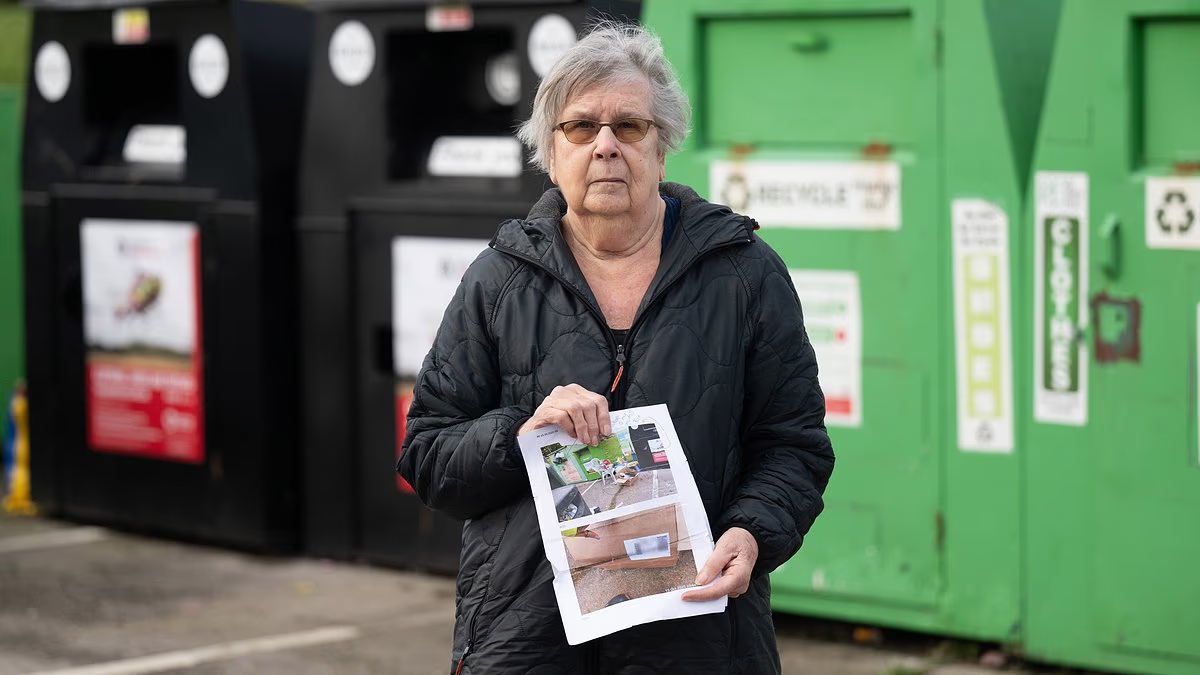
Carole Wright fly tipping fine became a widely searched topic after reports claimed an 83-year-old grandmother from Reading faced a £600 penalty over a cardboard box linked to her address. The story quickly attracted public attention because many people felt the case sounded harsh, especially when the waste involved was reported to be a single cardboard box near a recycling area.
However, the details need careful explanation. The phrase “Carole Wright fly tipping fine” is what many readers search online, but the reported £600 amount appears closer to Reading’s fixed penalty level for incorrect disposal of household waste, not the council’s higher listed amount for fly-tipping. Therefore, this article explains the case in clear, balanced language, while also showing what UK residents can learn from it.
In this guide, you will learn what reportedly happened, why the case caused debate, how household waste penalties work, and what steps you can take to avoid similar problems when using recycling bins or public waste points.
Carole Wright Fly Tipping Fine: Quick Fact Check
The Carole Wright fly tipping fine story is about a reported £600 fixed penalty notice connected to a cardboard box found near recycling bins in Reading. According to reports, Carole Wright, an elderly grandmother, believed she had used the recycling area correctly. Her family reportedly said the bins were full and that the box may have ended up outside the bin afterward.
Reading Council’s published fine levels are important here. The council lists £600 for incorrect disposal of household waste and £1,000 for fly-tipping. Because of that, the safest and most accurate wording is “reported fly-tipping case,” “alleged fly-tipping incident,” or “£600 household waste fixed penalty notice.”
This distinction matters for accuracy. Fly-tipping usually means dumping waste illegally, while incorrect disposal can include putting household waste in the wrong place, leaving items beside bins, or failing to follow local waste rules. Although the public may use the phrase Carole Wright fly tipping fine, a responsible article should explain the difference.
What Happened in the Carole Wright Case?
The case reportedly began when a cardboard box connected to Carole Wright’s address was found near a recycling point in Reading. The box allegedly had personal address details on it, which allowed it to be traced back to her household.
Reports say Carole Wright had taken waste to a recycling point and believed she had placed it correctly. Her family argued that she was not deliberately dumping rubbish and that the recycling bins were already full. They also said the situation caused distress because she is elderly and had not expected to face a serious penalty over one cardboard box.
The council’s position, according to public reporting, was that it had requested further information but did not receive the required response within the set period. The council also said it remained open to dialogue.
So, the main dispute is not whether fly-tipping is a real problem. It clearly is. The question is whether this specific case was handled in a fair and proportionate way.
Direct Answer for Featured Snippet
The Carole Wright fly tipping fine refers to a reported £600 fixed penalty notice involving an 83-year-old Reading grandmother after a cardboard box linked to her address was found near recycling bins. The case caused anger because many people believed the penalty seemed too harsh for a small recycling-related incident.
Why the Carole Wright Fly Tipping Fine Caused Public Anger
The Carole Wright fly tipping fine caused strong public reaction because the story felt relatable. Many people have taken cardboard, packaging, or bags to a recycling point and found the bins full. Some may have seen items left beside overflowing containers and assumed that was normal. However, councils may still treat waste left outside bins as improper disposal.
The case also involved an elderly woman. That made the story more emotional for many readers, especially because government guidance says enforcement should be proportionate and should consider vulnerability in some cases.
Another reason for the anger was the size of the penalty. A £600 notice feels very serious to most households. When people hear that amount linked to one cardboard box, they naturally ask whether a warning would have been more suitable.
However, councils also face pressure from residents to act against littering, dumped rubbish, and fly-tipping. Illegal waste harms neighbourhoods, costs money to clean up, and can make public areas feel neglected. Therefore, councils need enforcement powers. The challenge is using those powers fairly.
Is Leaving Cardboard Beside a Recycling Bin Fly-Tipping?

Leaving cardboard beside a recycling bin can cause problems, even when the person intended to recycle it. If the cardboard is not inside the correct container, it may be treated as waste left in the wrong place. In some cases, councils may call this incorrect disposal of household waste. In more serious cases, it may be investigated as fly-tipping.
This is why the Carole Wright fly tipping fine story matters. It shows that intention is not always enough. A person may believe they are helping by taking waste to a recycling site, but if the bin is full and they leave items outside, they may still face enforcement.
What Residents Often Get Wrong
Many people think a recycling point is acceptable as long as the waste is recyclable. However, councils usually expect items to be placed inside the correct bin. If a container is full, leaving waste next to it can create mess, attract more dumping, and make the site harder to manage.
Another common mistake is leaving address labels on boxes. If packaging later ends up outside a bin, the name and address can be used to contact or investigate the person linked to that waste. Therefore, removing labels is a simple but important habit.
How UK Fixed Penalty Notices Work
A fixed penalty notice, often called an FPN, is a financial penalty used as an alternative to prosecution. It allows a person to pay a set amount instead of the matter going directly to court. Councils can use FPNs for several environmental offences, including littering, incorrect disposal of household waste, and fly-tipping.
In Reading, the listed fine levels include £600 for incorrect disposal of household waste and £1,000 for fly-tipping. This is why the wording around the Carole Wright fly tipping fine should be careful. The search term may say “fly tipping fine,” but the amount reported matches the council’s household waste disposal penalty level.
If someone receives an FPN, they should read the notice carefully. There is usually a deadline to respond or pay. If the person believes the notice is wrong, they should contact the council or enforcement team quickly and explain the situation with evidence.
Can You Appeal a Fixed Penalty Notice?
Some councils say there is no formal appeal process for an FPN in the same way there might be for other penalties. However, residents can usually contact the issuing authority to explain why they believe the notice is wrong. If the fine is not paid and the council continues the case, the matter may go to court, where a judge can decide.
Because of this, residents should not ignore letters. Even if a person believes the council is wrong, early communication is important.
What To Do If You Receive a Similar Waste Fine
If you receive a waste-related fixed penalty notice, stay calm and act quickly. First, read the notice from start to finish. Check the date, the alleged offence, the location, the evidence, the amount, and the deadline.
Next, gather evidence. This could include photos of full bins, proof that you used a council recycling site, witness statements, health information if relevant, or messages showing that you contacted the council. If someone else helped you dispose of waste, write down exactly who helped and what happened.
Then contact the council or enforcement company using the details on the notice. Keep your message polite, short, and factual. Explain what happened, why you believe the notice is unfair, and what evidence you have.
For example, you could write:
“I believe this fixed penalty notice has been issued unfairly. I used the recycling point in good faith, and the bins appeared full at the time. I did not intentionally leave waste at the site. Please review the evidence and consider withdrawing the notice.”
Also, keep copies of everything. Save letters, emails, photos, and notes from phone calls. If the case becomes more serious, this record can help.
How To Avoid a Fly-Tipping or Household Waste Fine
The safest way to avoid a fine is to follow local waste rules closely, even when the rules feel inconvenient. If a recycling bin is full, do not leave items next to it. Take the waste home, try another recycling point, or report the full bin to the council.
Before recycling cardboard boxes, remove address labels. This protects your privacy and reduces the risk of your name being linked to waste that later moves or gets blown around.
If you hire someone to remove waste, check that they are licensed or registered. Cheap waste removal can become expensive if the person later dumps your rubbish illegally. Householders may still be investigated if their waste is traced back to them.
Simple Checklist for Residents
Remove your name and address from boxes before disposal.
Put waste inside the correct bin, not beside it.
Do not leave rubbish at overflowing recycling points.
Take photos if bins are full and report the issue.
Use only approved council services or licensed waste carriers.
Keep receipts for bulky waste collection or private waste removal.
Ask the council for help if you are elderly, disabled, or unable to move waste safely.
What Councils Can Learn from the Carole Wright Case
The Carole Wright fly tipping fine also offers lessons for councils. Residents want clean streets, but they also want fair treatment. If enforcement feels too harsh, public trust can fall quickly.
Councils should make recycling rules easy to understand. Signs at public recycling points should explain what to do if bins are full. Contact details should be clear. If a contractor is involved, residents should know who is handling the case and how to respond.
A warning-first approach may also be better in some minor cases, especially where there is no evidence of deliberate dumping. Serious fly-tipping should be punished firmly. However, a small, disputed household waste case may need a more human response.
This does not mean councils should ignore waste offences. It means enforcement should be targeted, transparent, and proportionate.
Why This Story Matters Beyond Reading
The Carole Wright fly tipping fine became a national talking point because it reflects a wider issue across the UK. Councils are under pressure to keep streets clean, while residents are under pressure from rising costs, confusing rules, and limited time.
Many people support action against fly-tipping. At the same time, they worry that ordinary residents can be punished for small mistakes. That is why clear communication matters.
For Google searchers, this story answers a practical question: “Could this happen to me?” The answer is yes, it could happen if waste linked to your address is found in the wrong place. However, you can reduce the risk by following local rules, keeping evidence, and responding quickly if contacted Quikconsole com.
FAQ
The Carole Wright fly tipping fine refers to a reported £600 fixed penalty notice involving an elderly Reading grandmother after a cardboard box linked to her address was found near recycling bins.
The phrase is widely used online, but the reported £600 amount matches Reading Council’s listed penalty for incorrect disposal of household waste, while the council lists £1,000 for fly-tipping. Therefore, it is more accurate to call it a reported or alleged fly-tipping-related waste case.
It caused anger because many people felt a £600 penalty seemed too harsh for a case reportedly involving one cardboard box, especially when the person involved was an elderly grandmother.
Yes, you can be fined if waste is left beside a recycling bin instead of inside it. Even if the bin is full, councils may treat this as incorrect disposal of household waste.
Take your waste home, use another recycling point, or report the full bin to your council. Do not leave cardboard, bags, or boxes beside the bin.
Conclusion
The Carole Wright fly tipping fine story is not just about one cardboard box. It is about fairness, responsibility, and how environmental rules affect ordinary people. Councils need strong powers to stop real fly-tipping, but those powers should be used with care, especially when a case involves an elderly resident and a small amount of household waste.
For residents, the lesson is clear. Never leave waste beside full bins, remove personal details from packaging, report overflowing recycling points, and keep evidence when something goes wrong.
If you are worried about a waste fine or recycling rules in your area, check your local council’s official website today. A few minutes of checking could save you stress, money, and confusion later.
